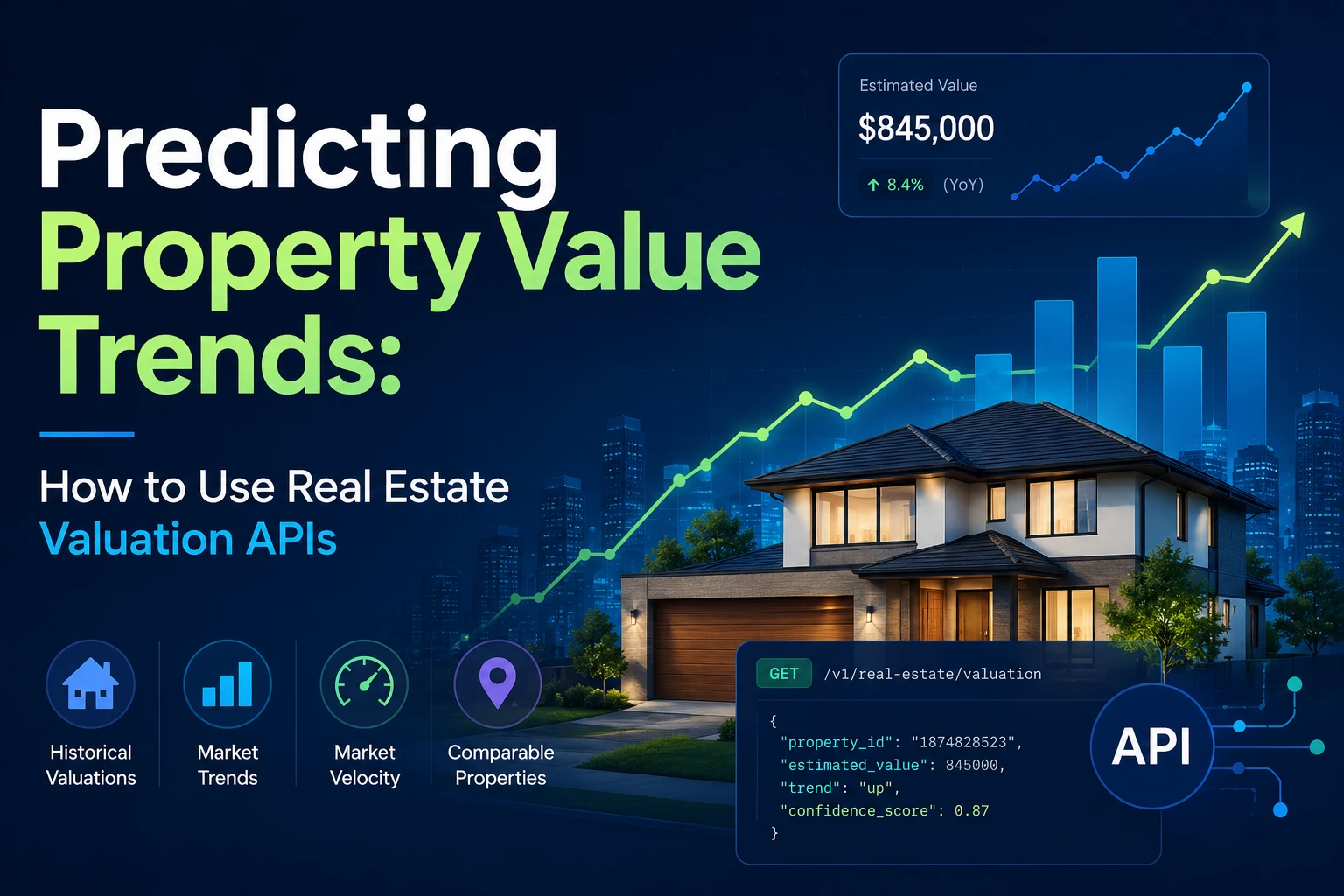
Building real estate platforms, pricing models, or market research engines requires a reliable stream of high-fidelity data. Whether you are designing an investment analysis dashboard, a regional property-tracking application, or a home valuation tool, accessing fresh property listings is critical.
However, trying to integrate MLS property data natively is a historically difficult task. Working directly with regional Multiple Listing Services (MLS) often means wrestling with outdated RETS or RESO Web API standards, dealing with decentralized schemas across thousands of counties, and navigating aggressive anti-bot firewalls on public listing sites.
To simplify this process, this developer guide demonstrates how to build a robust real estate ingestion pipeline using SteadyAPI. Rather than maintaining custom, fragile web scraping infrastructure that breaks on minor frontend changes, we will pull structured, normalized JSON data directly from MLS and public records.
Here is the plan for our data pipeline:
- Search and Discover: Query properties using geographical parameters and advanced filters.
- Extract Property History: Retrieve granular tax records, title transaction history, and building permits.
- Analyze Market Activity: Pull local hotness scores, listing-to-sold ratios, and price distributions.
- Enrich with Context: Evaluate neighborhood amenities, school ratings, and localized environmental risks.
Obtain Your API Key
Before writing your integration code, make sure to generate your personal credentials.
- Register for an account on the SteadyAPI Registration Page.
- Obtain your API token on the Personal Access Tokens Page.
1. Authentication
Every request to SteadyAPI must be authenticated using your Bearer token passed within the HTTP authorization header. Keep this token secure using environment variables.
Docs Reference: SteadyAPI Docs: Authenticating Requests
import os

API_KEY = os.getenv('STEADY_API_KEY', 'YOUR_AUTH_KEY')

headers = {
  'Authorization': f'Bearer {API_KEY}',
  'Content-Type': 'application/json'
}
2. Strategy 1: Targeted Discovery (Searching for MLS Property Data)
To build a property research tool, you first need a robust lookup system. When an investor wants to find active single-family homes with at least 3 bedrooms and 2 bathrooms within a specific budget, you need to map the current market catalog.
We will use the Real Estate Search endpoint. It accepts geographical targets alongside parameter-based filters like price boundaries, property type, and transaction status.
- Endpoint:
GET /v2/search(routed via Real Estate search) - Docs Reference: SteadyAPI Docs: Property Search
import requests

url = 'https://api.steadyapi.com/v1/real-estate/search'
params = {
  'location': 'Oklahoma-City_OK',  # Format: City_State
  'property_type': 'single_family',
  'beds': 3,
  'baths': 2,
  'min_price': 150000,
  'max_price': 500000,
  'sort_type': 'newest',
  'offset': 0
}

response = requests.get(url, headers=headers, params=params)
data = response.json()

for property_item in data.get('body', []):
    print(f"Property ID: {property_item.get('property_id')}")
    print(f"Permalink: {property_item.get('permalink')}")
    print(f"Price: {property_item.get('price', {}).get('display')}")
    print(f"Beds/Sqft: {property_item.get('description', {}).get('beds_display')} | {property_item.get('description', {}).get('sqft_display')}")
    print("---")
Key Fields to Parse:
property_id: The unique system identifier required for deep-dive property queries.price: Contains the current listing price and any price reduction records.flags: Booleans indicating if a property is a new listing, pending, contingent, or a foreclosure.
3. Strategy 2: Deep Property Ingestion (Tax and Transaction History)
A broad search query only scratches the surface. To calculate return on investment (ROI) or assess a property’s true background, you need deep historical records. This means inspecting past sales, annual tax assessments, and even structural renovations.
We will use the Property Tax History endpoint, passing the unique property_id discovered during the search phase.
- Endpoint:
GET /v1/property-tax-history - Docs Reference: SteadyAPI Docs: Property Tax History
url = 'https://api.steadyapi.com/v1/real-estate/property-tax-history'
params = {
  'propertyId': '1874828523'
}

response = requests.get(url, headers=headers, params=params)
history = response.json().get('body', {})

# Parse past transactions
print("Transaction Timeline:")
for event in history.get('property_history', []):
    print(f"Date: {event.get('date')} | Event: {event.get('event_name')} | Price: ${event.get('price'):,}")

# Parse tax records
print("\nTax History:")
for tax_year in history.get('tax_history', [])[:3]:
    print(f"Year: {tax_year.get('year')} | Assessment: ${tax_year.get('assessment', {}).get('total'):,} | Tax: ${tax_year.get('tax_amount'):,}")

# Parse building permits
print("\nBuilding Permits:")
for permit in history.get('building_permits', []):
    print(f"Permit Type: {permit.get('permit_type')} | Project: {permit.get('project_type_1')} | Status: {permit.get('status')}")
Why This Matters:
- Tax Trends: Identifies whether a county's tax valuations are steadily rising, directly impacting an owner's carry costs.
- Building Permits: Validates if major renovations (e.g., bathroom remodels, electrical work) were executed legally under municipal code.
- Price Appreciation: Calculates historical appreciation by comparing the current list price against historical transaction records.
4. Strategy 3: Market Intelligence (Housing Market Details)
If you are developing automated valuation models (AVMs) or advising sellers on listing strategies, you need to understand local market dynamics. Is the local ZIP code a buyer's or a seller's market? How quickly are homes selling on average?
By polling the Housing Market Details endpoint using a target ZIP code, you can programmatically extract real-time demand metrics.
- Endpoint:
GET /v1/housing-market-details - Docs Reference: SteadyAPI Docs: Housing Market Details
url = 'https://api.steadyapi.com/v1/real-estate/housing-market-details'
params = {
  'zipcode': '94131'
}

response = requests.get(url, headers=headers, params=params)
market = response.json().get('body', {})

metrics = market.get('market_metrics', {})
temp = market.get('market_temperature', {})
derived = market.get('derived_metrics', {})

print(f"ZIP Code: 94131 Market Profile:")
print(f"Median Days on Market: {metrics.get('median_days_on_market')}")
print(f"Market Temperature: {temp.get('local_temperature')} (Score: {temp.get('local_hotness_score')}/100)")
print(f"List-to-Sold Ratio: {derived.get('list_to_sold_ratio_percentage')}%")
Application:
If the local_temperature is registered as "hot" and the list_to_sold_ratio_percentage is over 100%, it indicates that listings are regularly selling above their initial asking prices. This metadata allows developers to adjust local valuation algorithms dynamically.
5. Strategy 4: Local Context (Amenities and Environment Risks)
A home does not exist in a vacuum. Its utility and ultimate value are heavily influenced by the immediate neighborhood, local school districts, and climate risk profiles.
We can evaluate these external variables using specialized lookup endpoints. Below, we retrieve the Environmental Risk profile for a property to check for natural hazards.
- Endpoint:
GET /v1/environment-risk - Docs Reference: SteadyAPI Docs: Environment Risk
url = 'https://api.steadyapi.com/v1/real-estate/environment-risk'
params = {
  'propertyId': '1874828523'
}

response = requests.get(url, headers=headers, params=params)
risk_profile = response.json().get('body', {})

print("Environmental Risk Dashboard:")
for hazard, details in risk_profile.items():
    if isinstance(details, dict):
        score = details.get('score')
        severity = details.get('severity')
        print(f"Hazard: {hazard.capitalize()} | Risk Score: {score}/10 | Severity: {severity}")
Contextual Data Points:
- Risk Scores: Pulls individual threat levels for Floods, Wildfires, Heat, Wind, and Air Quality.
- Trend Forecasts: Details whether local wildfire or wind patterns are projected to worsen over the next 30 years.
Putting It All Together: The MLS Ingestion Architecture
For a scalable real estate analytics platform, you shouldn't rely on sporadic, ad-hoc queries. Instead, build a serverless or scheduled task runner that automates this workflow:
- Map Regions: Use location search to gather postal codes and regional slugs.
- Incorporate MLS Listings: Call
/v1/real-estate/searchdaily to import newly listed and price-reduced properties. - Evaluate History: Pass new property IDs through the
/v1/real-estate/property-tax-historyendpoint to log structural permits, transaction records, and tax valuations. - Local Contextualization: Ping the
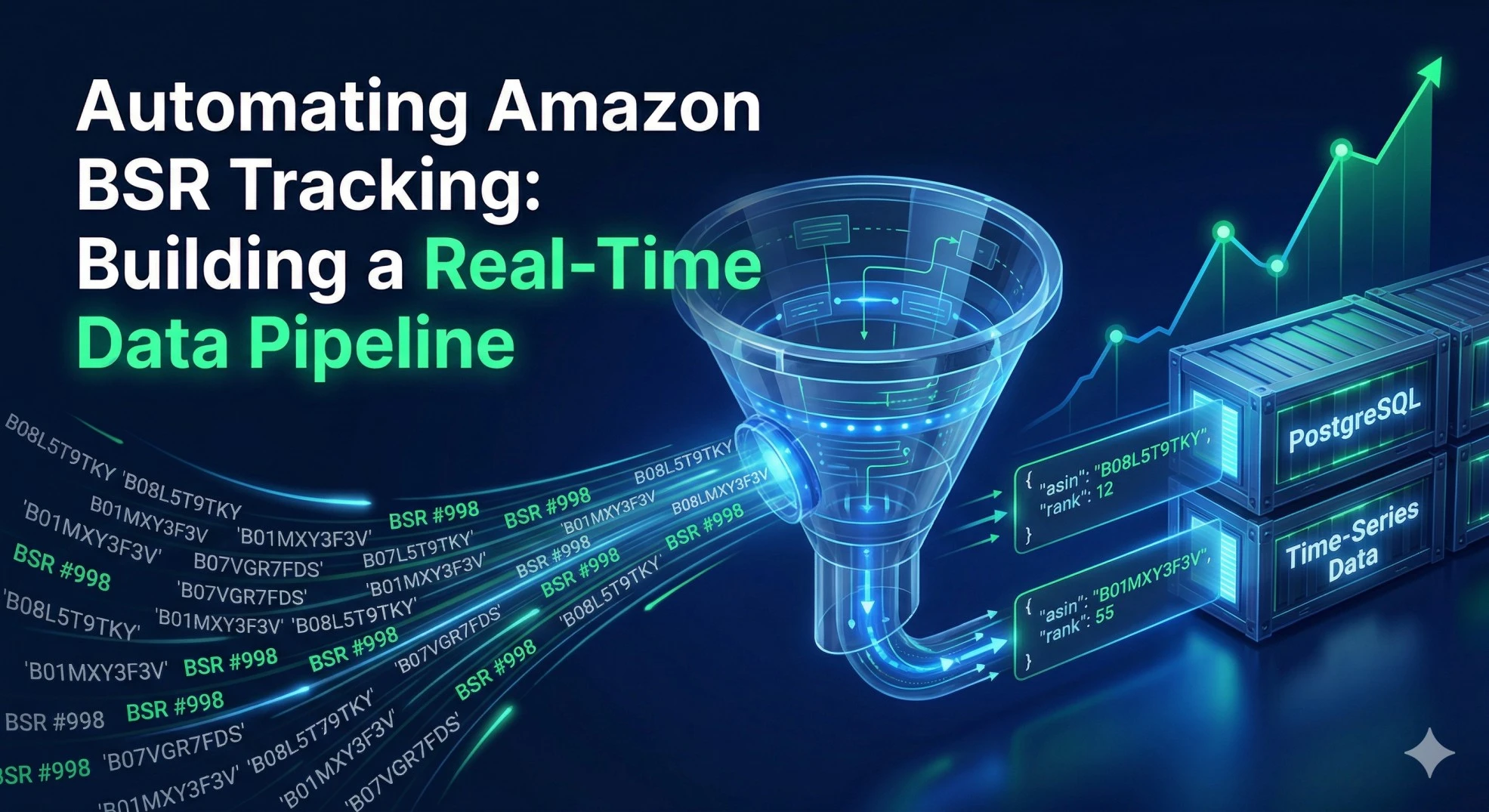
/v1/real-estate/environment-riskand Neighborhood Amenities Endpoint to score nearby schools, parks, and natural hazard liabilities. - Database Storage: Ingest this normalized JSON data into a relational database (e.g., PostgreSQL) to power historical trend charts on your user-facing dashboard.
Final Thoughts
To build reliable property intelligence tools, you need clean, high-fidelity real estate data. Instead of maintaining fragile headless browsers to scrape public search listings, developers can integrate a real estate API to pull structured JSON payloads directly.
Transitioning to SteadyAPI allows your engineering team to focus on building features, analyzing market data, and optimizing algorithms—leaving CAPTCHA handling, proxy rotation, and RETS translation to a dedicated API layer.
Explore the complete developer documentation to scale your implementation: